Four looms · four seasons
Each craft is a piece of China preserved in time.
We visited Suzhou, Zhenhu, Foshan, and Hangzhou and brought them back to the children.
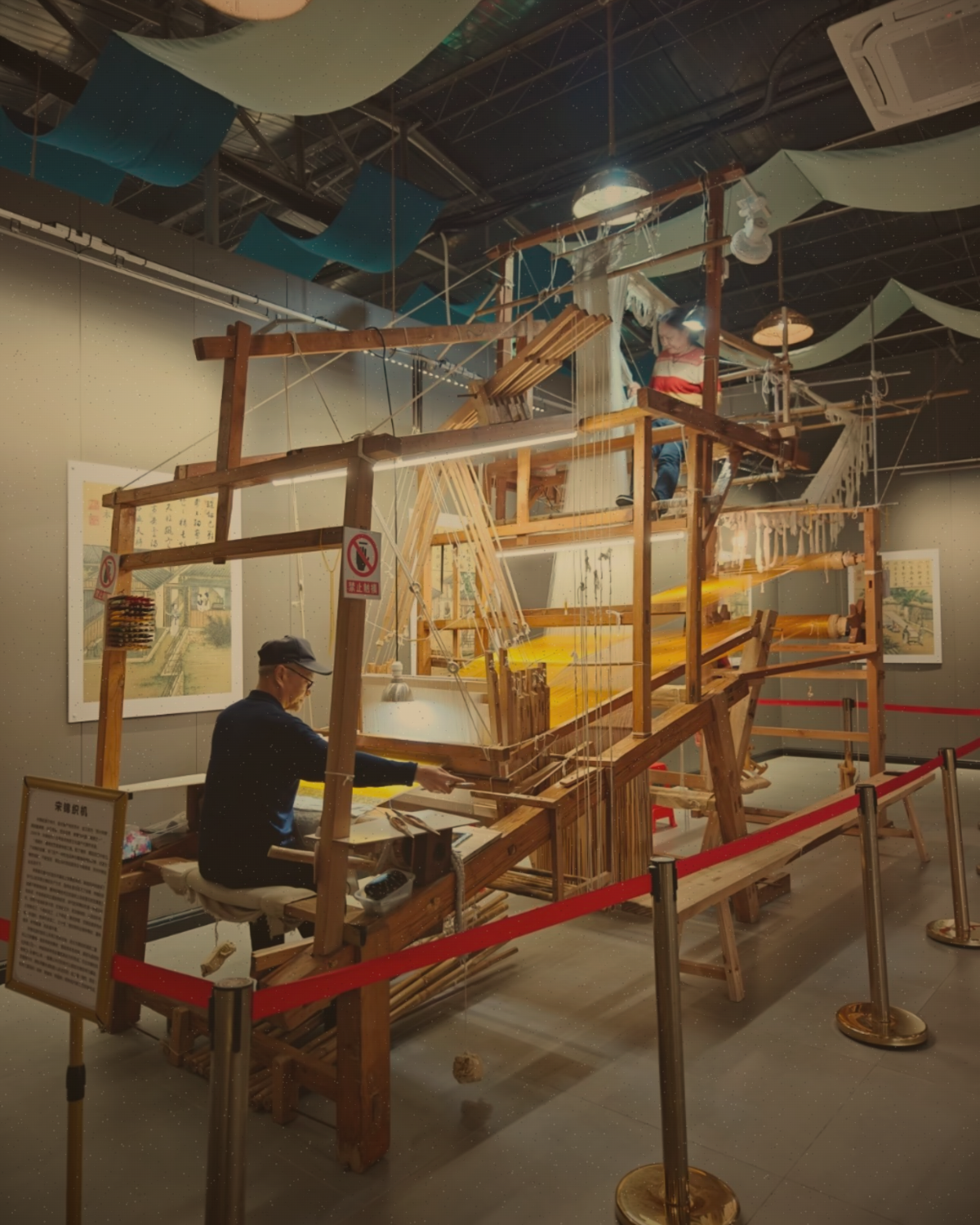
Song brocade Adding flowers to brocade
Song brocade originated in Suzhou during the Song Dynasty, characterized by its "warp-faced patterning and weft-defined colors." Weaving one inch of Song brocade requires over three thousand jacquard operations, and an old-fashioned hand loom could only produce about two inches a day.
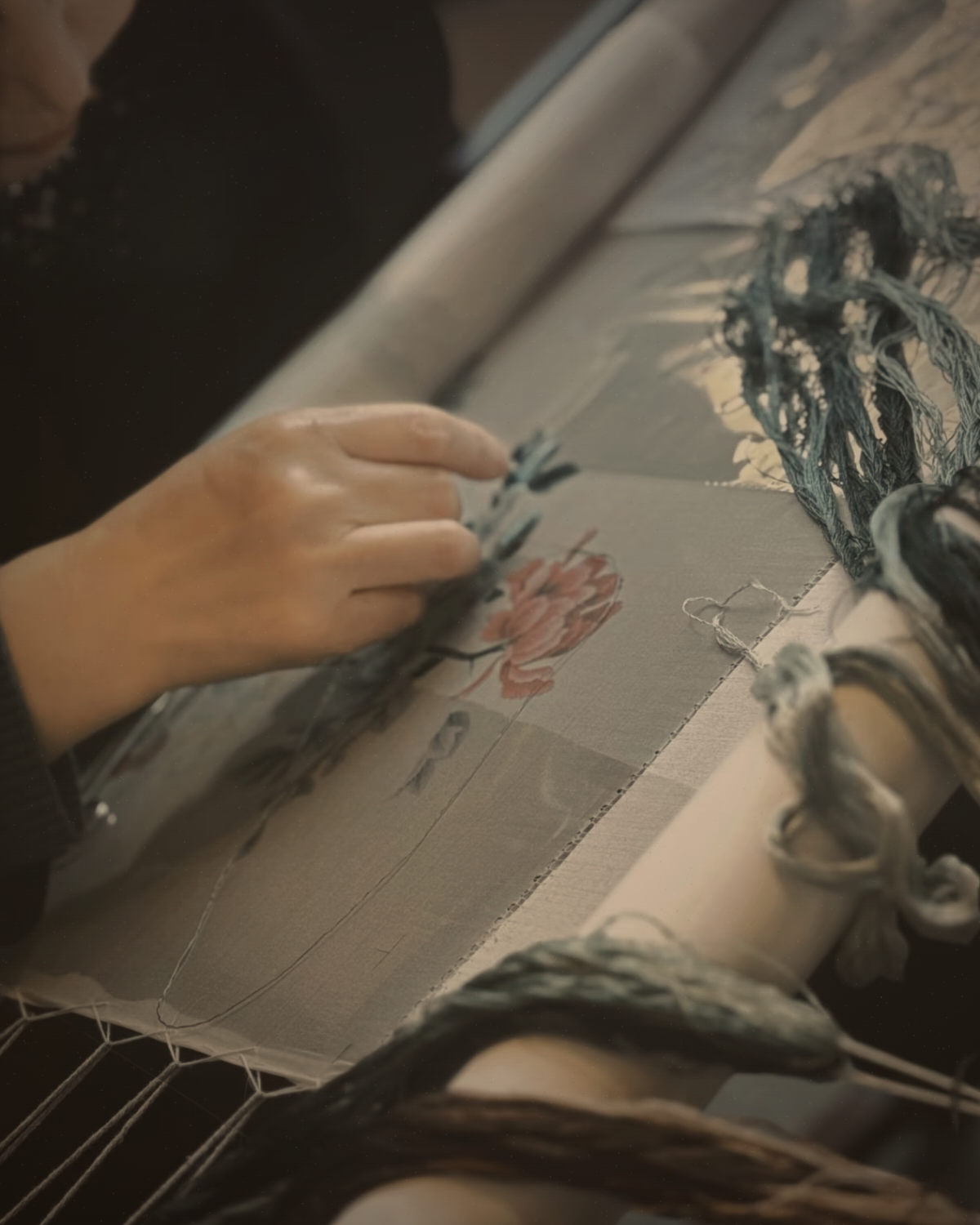
Suzhou embroidery A touch of spring.
The most exquisite form of Su embroidery is "double-sided embroidery" – a single piece of thin silk with different designs on each side, yet no visible stitches. A single strand of silk can be split into 64 thinner strands, finer than a human hair.
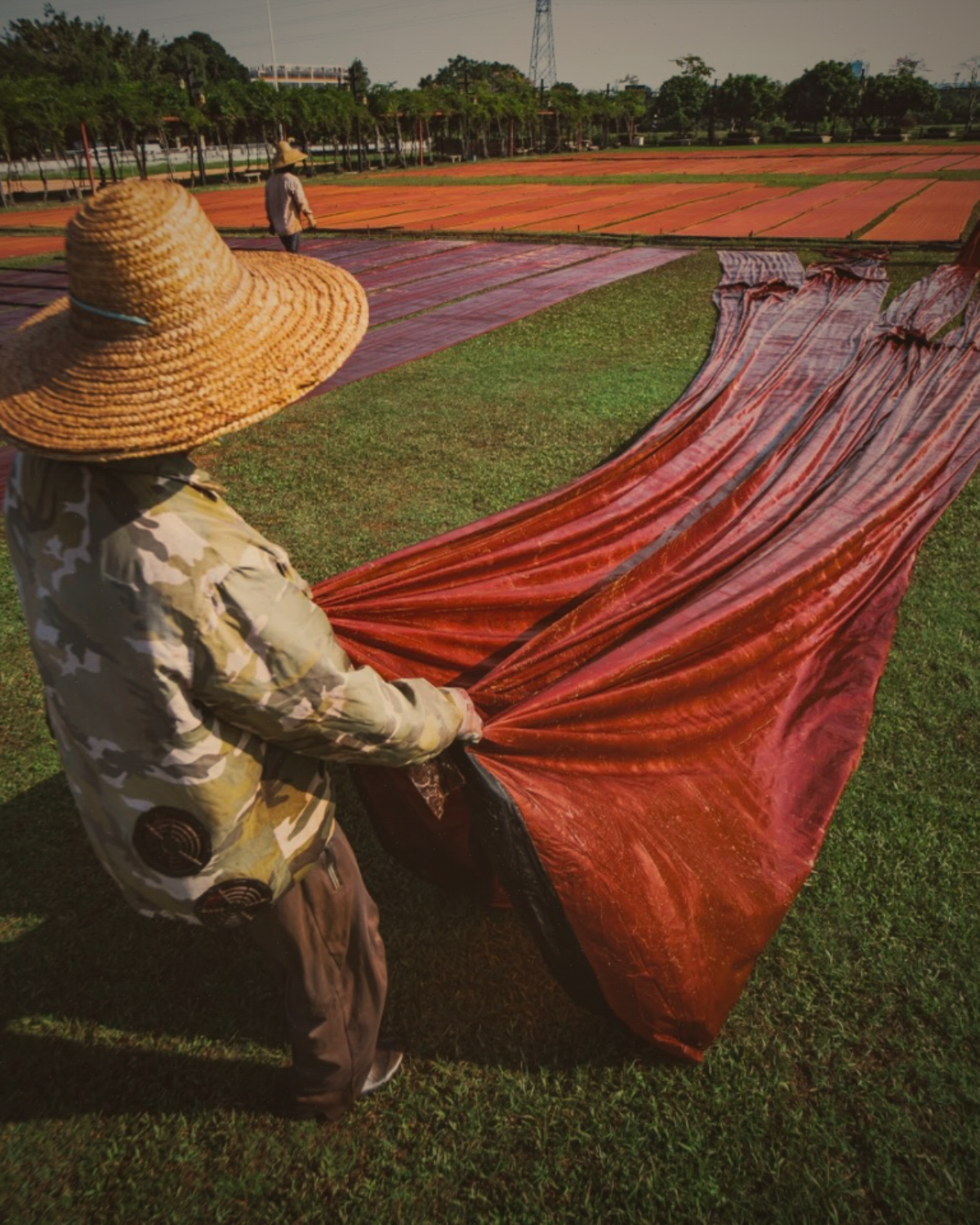
Xiangyunsha Sun-drenched and moon-bathed
Gambiered Canton gauze is known as "soft gold." It's repeatedly dyed and sun-dried with gambier juice, and finally treated with unique river mud from the Pearl River Delta to achieve its black and lustrous texture. It can only be sun-dried in the summer.
Silk gown Joro cool and breathable
Luo silk, the lightest of all silks, is woven using the "gauze weave" technique where warp threads are twisted in pairs, creating fine, breathable openings. It's so light it can be held in the palm of your hand, offering a cool feel without revealing skin. Since the Han and Tang dynasties, it has been a summer tribute, with Hangzhou and Suzhou Luo silks each having their own unique qualities. We follow ancient methods to weave Luo silk, creating a breathable summer garment for children.